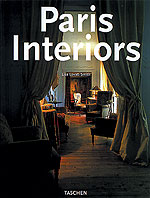
“Paris Interiors” by Lisa Lovatt-Smith (Taschen)
This city’s most attractive private homes are only seen by a select few. “Interiors” offers a rare peek into the imaginatively conceived apartments and houses of such prominent Parisians as Isabelle Adjani, Christian Lacroix and American photographer David Seidner. This trilingual (Fr.Eng.Ger.) coffee table book takes us from baroque opulence to cool, stylistic understatements — documenting the homes of some 50 artists, designers and actors. What kind of place do Pierre et Gilles live in? And how about star designer Philippe Starck? Does he fill his apartment with his “signature” pieces? This book provides some surprising answers. BR
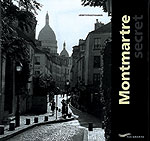
“Montmartre Secret” by Liesbeth-Passot-Kanbier (Parigramme)
An eloquent black & white photographic tribute to the Paris hilltop neighborhood that has inspired generations of artists. The photographer, who has been based in Montmartre for a decade, captures details and moments only someone who lives in a place can achieve. BR
“Six Armies in Normandy” by John Keegan (Pimlico, London).
The Battle of Normandy lasted a little over 11 weeks. That short space of time — from the lowering of the first troop transport’s gangplank onto a Normandy beach on 6 June 1944 to the first Leclerc Division's tank tread coming in contact with Parisian paving stones on August 25 — turned the tide of World War II.
Hitler’s early successes in Europe led him to make two monumental errors — thinking his army was invincible and that he alone in the German high staff held the keys to the strategic insight required to conduct the war. So when his armies were faced in Normandy with well-supplied and trained units from six countries — American, Canadian, English, French, German, Polish, and Scottish — the German’s were doomed to opt for untenable positions which eventually led to the collapse of the Third Reich.
Keegan’s well-researched book elucidates one of the most written about aspects of the war. Military experts expected this battle to represent the ultimate model for the next war (discounting nuclear weapons). This would be the one the West would wage in Central Europe against an invasion by the Soviet Union. and where the Allies would most likely find themselves fighting from the position the German army had been in. MH
“The Life of Henry Brulard” by Stendhal, translated by John Sturrock (New York Review Books )
This thinly disguised autobiography of one of France’s best-loved writers is so scorchingly critical that it was unpublishable for more than a century. An excellent new translation of the book into English transports the reader back to Stendhal’s youth in Grenoble. In addition to being a window into the life and times of post-revolutionary France, it stands as a harbinger to a genre of self-reflective literature probing the essence of memory. BR
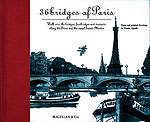
“35 Bridges of Paris” by Claude Agnelli (Magellan & Co)
With text and sketches by the author, this book constitutes a “labor of love” dedicated to the engineers, sculptors and architects who created these unique Parisian monuments. A “petit cadeau” idea for visiting guests this summer. BR
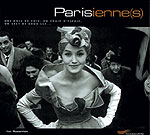
“Parisienne(s)” Alain Rustenholz (Parigramme)
Parisian women pictured by French photographers from 1900 until present times. This book of black and white photos — including portraits of Arletty, Mistinguette, Simone de Beauvoir and Catherine Deneuve — provides a nostalgic backward glance at some of the women who created the parisenne.mystique. BR
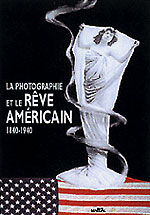
“La Photographie et le Rêve Américain, 1840-1940” (Marval)
Published to coincide with an exhibition to be seen at Paris’ Hôtel de Sully until mid June, this jumbo coffee table book chronicles American photographers set on producing a visual record of their country during the first hundred years of the medium’s existence. The pictures are from Stephen White’s extensive collection, and include such rare gems as a candid photo of Buffalo Bill at Paris’ 1889 Universal Exhibition, a shot of Orville Wright’s first flight at Kitty Hawk in 1903 and a peek at Uncle Ben celebrating his 100th birthday in 1893. BR
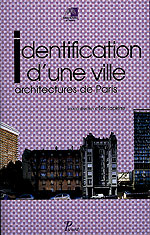
“Identification d’une Ville, architecture de Paris” (Edition du Pavillon de l’Arsenal Picard)
How did this capital come to look the way it does? Coinciding with an exhibition currently on view at the Pavillon de l’Arsenal, this book (in French) traces three centuries of Parisian architectural history. Profiles of the city’s most influential architects put names and faces to the creators of buildings we walk past daily. BR
Reviews by Marc Heberden & Bob Roberts