|
|
A Chat with Paris Expat Author, David Applefield

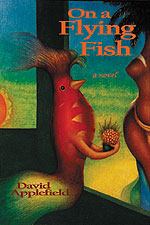
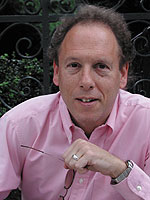
Paris expat and self-proclaimed cultural guerilla, David Applefield boasts an impressive and multifarious array of literary undertakings. In 1983, he founded what is now the longest-running Parisian literary journal written in English, FRANK. He is the author of two highly-popular guidebooks, Paris Inside-Out (Globe-Pequot Press), and The Unofficial Guide to Paris (Frommer’s). He teaches contemporary culture at L’Institut d’Études Politiques (Sciences-Po). He represents the Financial Times in West Africa, and he coached the recent season of MTV Real World series in Paris. Now, his second novel On a Flying Fish, is just published by Mosaic Press, and reviewed in the February issue of the Paris Voice.
Interview conducted in a Chinese restaurant in Montreuil-sous-Bois in January 2004 with Matt Langione.
ML: David, you have perhaps the single longest job description that I have ever seen! [laughter] Your enterprises are really quite diverse. Is there any unifying quality about what you do?
David Applefield(DA): Well, it’s true that I like to think of myself as a cultural guerilla, meaning that I use unconventional strategies and tactics to advance the cause of talented but unknown writers, artists, and sometimes developing countries. However, if I had to pinpoint a unifying characteristic in all that I do, it would be this: I’m trying to help promote and disseminate cultural content that merits being read by a larger readership, be it literary works, third world politics or ignored cultures. In FRANK for example, I tend to look for works of fiction that often don’t have a commercial chance in today’s mainstream venues. Beyond that, well, I strive to conduct an interesting and involved life, everyday.
ML: Yes, and that’s certainly a theme in your recent novel, On a Flying Fish. A book editor struggles to publish an “unpublishable manuscript.” You must have seen quite a few of those over the years.
DA: Well, yes, but you have to distinguish between the glut of writing that is unpublishable because it is dull or overly self-indulgent and the other stuff that is fascinating but unpublished because it is difficult, demanding, and more challenging to sell. I like to think of the manuscript as the battleground, where ideas and language duel it out, where the writer arm-wrestles him or herself. The manuscript is essentially literature in incubation, it’s the living matter before birth—anything can still happen. With my first novel, Once Removed, I inelegantly stumbled upon an ending for the book by loping off the last nine chapters. The book suffered from an appendage that I struggled to re-shape, when the solution was simply to amputate. I don’t know why I’m being so medical. In On a Flying Fish this obsession for the manuscript is celebrated. I tend to gravitate toward the irony present in the art Vs life dilemma. There’s a manuscript within the story, and of course, both end up being part of the published work.
ML: It is indeed a very multi-layered story. You oscillate between first and third person, between multiple narrators. Of course, it’s part of your rightful literary arsenal. But what impelled you to use it?
DA: Well, frankly, the novel was written over a substantial period of time. And over time, your own point of view shifts. This can translate into a problem if you are aiming for one consistent tone and voice. But it can also result in a particular richness. I consider my own voice to have layers. The more distance you have from your own narrator, the freer you are to comment and criticize. So, I tried to weave these disparate selves into the fabric of the story.
ML: The novel of multiple narrators is really a 20th century phenomenon, propagated by the likes of Joyce, Faulkner, and even more recently in America, Philip Roth. You yourself have pursued considerable studies in literature, first at Amherst College, then later at Northeastern University. How have your studies influenced your writing?
DA: I don’t think of myself as particularly erudite but certainly what one reads invades the same psyche you use to compose fiction. I take it as a good sign when I’m reading a novel and promptly feel the physical desire to write myself. But aside from literature and good books, the novelist in me pays attention to the many vehicles and venues of meaning that we absorb from all sorts of sources, like the texts on the back of cereal boxes, the graffiti in the stalls of public toilets, the witty and wacky stuff printed on t-shirts. James Joyce used to claim that he read everything with the exact same intensity. I think that I have a tendency to do the same. I’ve sprinkled much of that into my novel. As a writer, everything becomes part of your pallet.
ML: You mention Joyce. Who have been your favorite authors?
DA: While at grad school, I felt deeply connected to Lawrence Durrell. I admired how he could tell the same story from different points of view at once. And like many people, I read Ulysses at age 20. It really marked me. It’s a book about how to read. It imbued me with a deep receptivity to the endless possibilities of fiction.
ML: For a while it was fashionable to claim that ‘the novel is dead.’ What is your response to that?
DA: Frankly, the novel as a form cannot be dead. It has become identified as the predominant literary vehicle for interpreting the ways we understand reality. And contemporary reality, of course, is an endless well. Perhaps it could be said that distinctions between fiction and non-fiction are vastly overstated. In fact, the distinction is imposed upon the writer by the commerce of writing, not by the writing itself—the publishing houses. It’s certainly not essential to the writer. If I call my character Ernest or David, does it matter to the reader? My fictive island in On a Flying Fish is Santa Roseau, but it is based on St. Lucia, a place I spent some time myself. Marcel Proust, for example, certainly wouldn’t have known how to respond if asked whether his work was fiction or non-fiction. It’s both.
ML: David, by writing and publishing in Paris, you have inherited a storied tradition of expatriate literature that dates back to the days of Benjamin Franklin, through to Henry James, and most famously perhaps, to Hemingway, Fitzgerald, Dos Passos, and Gertrude Stein. How do you find that the tradition has been maintained?
DA: Well, firstly, the tradition is maintained simply by the fact that Americans in particular continue to come to Paris, attracted by a lifestyle, and aesthetic, daily pleasantries, an escape from puritan ethics, and a fair amount of myth. Today expats come to Paris for a shifting range of diverse reasons. Very recently, more Americans are finding that they are more comfortable living outside of the U.S. because of their conflict with foreign policy and a government that represents neither their politics nor their way of seeing the world. Another change in the tradition is the fact that we can now live in more than one place at once. You can teach poetry at Princeton in the fall and write poems in Paris in the spring. You can have your day-job in San Francisco while painting in the 20th arrondissement. Our existences are being defined by the speed of our modems. And ADSL connections are the expats closest allies. If used right, technology allows us to develop lives of multiple selves. This can serve art if it doesn’t devour the individual. Hemingway wasn’t thinking about that, I can assure you. Being an expat isn’t quite what it once was. Home has now become where you turn on your computer and check your e-mail.
To return to your question, I try not to think too much about the long and glorious literary traditions associated with Paris. There’s a certain danger in having an over-pronounced historic sense of self. Yet, there will always be a romanticism about uprooting yourself and relocating your self to Paris. And it’s probably true that there’s no better place to write than right here. Paris is more than a city; it’s a state of mind. And a cocktail of feelings.
ML: You are an American. You spent a portion of your youth in Canada. Now you are an expatriate writer living in Paris. Where do your alliances lie?
DA: Krakow, Kiev, Glasgow, Perth Amboy, New Jersey, Montreuil, Cotonu, Tripoli ... all the places that I’m thinking about as I embark on my next work. It’s quite an interesting question, especially with all that is going on in the geopolitical sphere. Frankly, I don’t want to be represented by anybody, any country, any president, or any party. I like street corners in fifty nations, and I have friends with whom I connect in Istanbul, Bamako, Amherst, St. Pete, Florida. That’s where we live, in the relationships. There are facets of American culture that I continue to feel intimate with—the candor with which Americans talk to each other, for example. Bearing your heart at the end of an oak bar just isn’t something that happens among strangers too often in France. I’m grateful to be able to feel equally comfortable in a café in Dakar, Paris, or Boston.
ML: Your metier requires you to travel. And travel is a major theme in your recent novel. How has your travel experience contributed to your perceptions of culture, and how are they important in your writing?
DA: Travel is one of the most enriching vehicles for not only understanding the world, but understanding yourself. When you are moving through time and space in a car, on a train, by foot, you tend to live in your own mind. Your imagination is freed up and you piece together the scenery and spontaneous encounters with the rich inner life of the mind.
Real time in On a Flying Fish takes place primarily in Frankfurt, Paris, and on trains in Italy in the near past. The fictive time is in the West Indies. The move back and forth between settings corresponds with the switches between third and first person. Yet, the characters, regardless of where they are, become immersed in the world of the novel. That’s the irony, it’s all travel. The journey is no stranger to literature. And at the end you are left with nothing more than the solitude of your own heart—or pen, in this instance.
ML: What has been your best travel experience?
DA: That’s like asking name your favorite sunset or your best time making love. I don’t know. I like the feeling of being alone and stimulated by a new set of circumstances. Even the weight of melancholy is enriching. Admittedly, a bit of local currency in your pocket and the knowledge of a few sentences in the local dialect adds comfort. But the key to all travel is the sensation of being free. If you want names -- I’m very attached to an island in the West Indies called Dominica. There are only 71,000 inhabitants, but there are 300 rivers! I love sitting in a Cap Verdean restaurant in Dakar called Lucia’s and riding on the back of the motorbike taxis in Benin. Some of my life’s richest moments have been passed in the poorest, most desolate spots imaginable. Dancing outdoors with a hairdresser in Ouagadougou, drinking with gem smugglers in Madagascar. And Paris of course, my home, continues to inspire me. The city simply refuses to fall into the realm of the banal.
ML: So, it’s you and the formidable blank sheet of paper. Are there any tricks that you employ to stir the creative juices when they’re not flowing?
DA: You know, there are no tricks to writing. I’ve never formally imposed harsh quotas on myself, like some writers do. When I set out a time to write significant portions of a novel, I try to write for four uninterrupted hours a day. Sometimes when I’m stuck, I take a narrative question and grind it down to its basest practicality. Then I’ll go take a walk. I find that I cannot avoid writing. My mind is writing when I’m walking the dog, taking a shower, cooking. You are working out questions of narration while you try to sleep. Sleep is never the same when you are in the midst of a book.
ML: So, as readers, what can we expect from you in the future? Do you have any works in progress?
DA: Three real things and fifty nutty notions. Right now I’m working on—a collection of stories about strange encounters in far-off places, tentatively titled, Camel’s Milk, and the fictionalized story about the migratory adventures of my family from Ukraine to New Jersey. Of course, Paris is where it really happens.
|