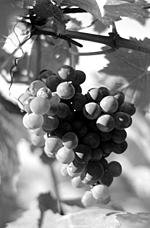
It’s almost silly season again: at the end of November (the third Thursday to be exact) oenophiles, aficionados, devotees, drunks, snobs and normal working stiffs the world over will be waiting, their tense anticipation barely hidden, for the arrival of the first squeezings of the Gamay grape for 1999: the Beaujolais Nouveau!
Variously dubbed “A refreshing young wine,” “Château de Hype” or “the best way to get rid of bad wine ever invented,” the official Beaujolais release date is traditionally the last week in November and will represent over 20 percent of the gross sales of the wines from this region for the year — in the space of three short months.
The phenomenon is worldwide: bars and restaurants at compass points all over the planet — from Paris to New York and Tokyo — will stay open late to be the first to pour a glass of the grenadine red wine for eager patrons willing to shell out enough dinero to make it worth their while.
747s of the stuff will be winged around the globe to make their appearance simultaneously in all major markets of the world and for the next few weeks; regardless of the press or learned opinions, more of this wine will be swilled than any other, earning producers, distributors, and restaurateurs a good chunk of their yearly intake.
But what’s the deal? Why all the huff over a bottle of red wine? One with no particular breeding at that? What mystical attraction does this first pressing of a common grape hold for the seasoned and uninitiated wine drinker alike?
To find some of the answers, I scoured some of France’s most famous outlets: Not just those emporiums catering to the glitterati, but also those dealing with normal everyday-type people.
You can’t evaluate wine sales in France without talking to Nicolas. This chain is the largest wine and spirit distributor outside the giant supermarkets, and has a solid reputation for good quality products across the price spectrum.
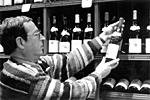
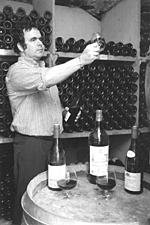
I hit one on boulevard Malsherbes, just a bit south of Saint Augustin. Serge Michelson, the kellermeister there took me under his wing to explain what the wine was all about:
“The Nouveau is from the newest vines, generally speaking... “In France wine can only be made from a vine which has shown it’s fourth leaf, or is at least four years old.” Generally, the vintners will use these grapes for the nouveau first, saving the mature vines for the regular cépages sold throughout the year.”
Primeurs wines have similar characteristics: a grenadine red color, not too dark and slightly shiny, almost brilliant. The nose should be light and fruity, not heady or emphatic, and well rounded. Red fruit should explode on the pallet: raspberries and cherries mostly, but the flavor should dissipate as the wine goes down. There should not be any lingering taste after the wine has been quaffed.
Bananas, one of the favorite tastes described in association with the wine are a no-no: “Some producers will add chemical yeast to start the fermentation...” continued Serge. “These yeasts give the wine a flat pastiness, often described as banana-like. In fact it’s not good wine.” “The real taste should be supple, not over-powering, with no trace of bitterness afterward.” And, yes — it should have no bananas!
Thus armed, I trekked to the boulevard Haussmann, where I spoke with Marc Sibar, the manager of Caves Auge, in business since 1850 and a landmark for œnologists everywhere.
“There’s no specific color or clarity to be looked for.” He told me. “The color, like the taste, can be altered chemically to anything you want. The marketing guys have pushed the grenadine red tint, so people look for it. If some genius liked green, it would all be green.”
Does this mean Beaujolais Nouveau is — perish the thought — contrived? (Shudder) Made for the market it has created? “Of course there is an element of that,” replied Marc, “but the real stuff has always been in demand. Just don’t fall for the hype.” A good wine will be clean: it will come from vines planted in well-worked soil, so the yeast comes from the ground and ferments the sugar without the intrusion of additives. “The soil should be well aerated and full of life — little bugs and worms and things,” said Marc carefully choosing his words.
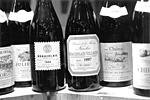
Most people say “Beaujolais” when ordering wine, and wait for a duly marked bottle to appear. They could be in for a surprise. It’s not just the name of a wine, it’s the name of an entire winemaking region and there are 12 varieties (Beaujolais, Beaujolais Villages, Brouilly, Chenas, Chiroubles, Côtes de Brouilly, Fleurie, Julienas, Morgon, Moulin à Vent, Regnie and Saint-Amour) bottled on a strip of land along the Saône River in western central France between Macon and Arbresses. Each purports to have its own identity, flavor, nuances etc.
“Not true...” said Marc Sibar. “It’s a mono-cépage region, all the wines are made from Gamay. The only difference is the way in which the soil has been worked. The amount of effort is reflected in the taste, hence the price of the different varieties, but they’re all Beaujolais.”
Marketing again: Beaujolais is the “appellation” generically given to the bulk of the wine production from the region. Individual producers who do not participate in the collectives bottle their wines according to the sub-region where it is produced. In any event, there’s precious little market share for each type, coupled with an over-abundance of product bearing the generic name.
“Two years ago, they only harvested every other vine” Sibar went on, “and they still had to stop after three harvests — there was nowhere to put all the wine; the cellars were already full.”
Thirty years ago, wine was not as universally popular as it is today. While the various regions have been putting out their products for centuries, it has only been since the introduction of hardier, disease-resistant strains of vines and standardized production methods, that consistently good vintages have been produced. “There are no more bad years.” A distributor in Saint-Emilion told me. “I can send any of my vintages to Timbuktu or Beijing and it will taste the same as it does here.”
So why the “nouveau” schtick? Is there a difference between it and the regular, garden variety Beaujolais? Why does everyone rush to drink nouveau before the end of February? Does it all turn to vinegar? If I have a cellar full will I have to throw it all out by then? Does it have an investment potential?
“Certainly.” said Serge. “If it’s a good Nouveau, it will be a good Beaujolais after it’s not Nouveau anymore.” So, you’ve been warned. The best way to judge the wine is to buy several types at different outlets across the price range. If you like what you bought, keep some for later in the year and taste it again. Experience with a good producer can be an invaluable guide to next year’s foray.
Probably everyone should get a bottle at Nicolas or Franprix just to savor the market base line, then use it as a point of reference — taste and price-wise — for other bottles. Most distributors agree that even with a great similarity across the board, as many different brands should be tried as possible to get the true range of qualities from this harvest.
Francis Gourdin, the œnologist of the smallest vineyard in France (Montmartre), contends that the Gamay grape will be very good this year having benefited from high temperatures, heavy rains late in the season and continued sun into September. So, according to him, even if the Nouveau isn’t up to all the hype, at least the Beaujolais should be pretty good for the rest of the year.
Some guidelines for the wary: a “good” Nouveau will run around 26-28F at better outlets like Nicolas and Monoprix. Elesewhere, expect to pay upwards of 30-35F, — more at specialty places like Fauchon, Hédiard and Auge. The bog-standard Nouveau from Champion or Franprix will probably come in under 25F and some predict other primeurs will even go as low as 10F before the frenzy is over. Restaurants will be charging from 70-150F depending on the producers they choose as well as their own menu prices.
The Beaujolais Villages Nouveau, usually better in overall quality, comes out two weeks later, and is proportionately more expensive, but sometimes well worth the wait.