Karin, David and Charlie, |
|
Books
Scott Steedman
Manguel on Love and Hate
What do pictures mean? Can we read an image the way we read a book? We say that every picture tells a story, but does it really? What narrative flows from the Mona Lisa, or a Giacometti sculpture, or a Marlboro ad? Or are these potent images too static and loaded with other people’s tales for our minds to grasp?
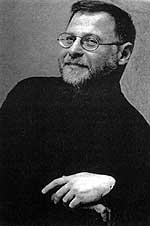
In his new book “Reading Pictures: a History of Love and Hate” (Bloomsbury / Knopf Canada), Alberto Manguel brings his formidable intellect to this huge and gnarly question. Born in Buenos Aires and a Canadian citizen since 1985, Manguel has lived in Italy, Tahiti, Britain and France, including a long stay in Paris. A prolific writer, he is also a talented editor and linguist whose varied output comprises translations, anthologies, a novel, and the seminal “A History of Reading” (Flamingo / Actes Sud), which won the French Prix Médicis. “Reading Pictures” is a kind of companion volume to the latter.
“I don’t know whether such a thing as a coherent system for reading images... is possible,” Manguel writes in the introduction. These doubts out of the way, he tackles a dozen favorite pictures and looks at them from every conceivable angle in search of a meaning (or many meanings). So Picasso’s “Weeping Woman” is the image as violence, and Caravaggio’s “Seven Acts of Mercy” is the image as theater. The result is a beginner’s visual vocabulary, a few prize works from what André Malraux famously called “the virtual museum” of our minds.
It is an impressive piece of erudition, full of big ideas worn lightly, a kind of art history without the cant.
Alberto Manguel will discuss “Reading Pictures” at the American Library in Paris on March14; see notebook for details. The program will include a discussion of Picasso’s relationship with his mistress Dora Maar, exploring the links between violence and the stories in Picasso’s art.
|
|






