Briefly Noted
by Scott Steadman
“French Fiction: The Mitterrand Years” by Colin Davis & Elizabeth Fallaize (Oxford University Press)
This readers’ guide is written for university students, but is lively and lucid enough to please the layman. The authors take six important recent authors — Marguerite Duras, Daniel Pennac, Jorge Semprun, Jean Echenoz, Hervé Guibert and Anne Ernaux — all symbols in various ways of the Mitterrand era, and dissect one novel by each. The analyses are sharp and remarkably free of pomp. The over-riding theme is optimistic — how French fiction is slowly escaping from the sterile formalist debates of the postwar period and rediscovering history, politics and good old-fashioned storytelling. All the quotes are translated, but it still makes you want to curl up with a bilingual dictionary and read some good novels in French.
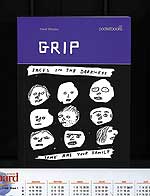
“Grip” by David Shrigley (Pocketbooks)
More twisted, delirious comedy from this demented Scot, who brought us my favorite book of 1998, “Why We Got the Sack from the Museum” (Redstone). To say that his humor is black is like saying it’s a touch nippy at the South Pole. These are primitive drawings of primitive subjects — rejection, masturbation, defecation, our parents with no clothes on. Much of it is puerile and incomprehensible at first glance; the best bits cut nice and deep. A hilarious and compelling book that is highly recommended.
“Five Hundred Self Portraits” (Phaidon)
The challenge of immortalizing their own likeness has proved irresistible to painters. This innovative and affordable book contains 500 such portraits de l'artiste. Arranged chronologically, from ancient Egypt to Gilbert and George, they are presented without commentary, in complementary pairs. Alongside the big names — Leonardo, five Durers, ten Rembrandts, four Van Goghs — are many fine unknowns, all staring out at the viewer with searching eyes. Also available in French, as 500 Autoportraits.
“Mémoire des Camps,” edited by Clément Chéroux (Marval)
There exist a surprising number of photos taken in the nazi concentration and extermination camps. The best known date from the Liberation, but there are others shot for the family albums of SS guards, even a few by internees. These brutal and emotive images have long been published without dates, names or explanations. This book, the catalog for the exhibition at the Patrimoine Photographique/Hôtel Sully (62 rue St-Antoine, 4e, tel: 01 42 74 47 75) until March 25, tries to remedy this situation; it also shows how the images have appeared in newspapers and magazines since. The four most extraordinary pictures were taken by five internees linked to the Polish resistance in August 1944. They show the gas chambers and crematorium at Auschwitz in operation, when they were killing 20,000 people a day.
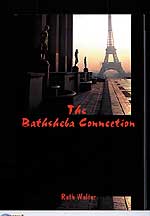
“The Bathsheba Connection” by Ruth Walter (Writers Club)
A petty gangster is brutally murdered in the Marais. His wife, beautiful model Véronique, disappears with a bronze statue of Batcheba. Enter our hero, retired New York teacher Goldie Yampolsky, whose amateur investigations soon lead her to Russian mobsters and more murders. Walter, an American based in Paris, has written literary stories and is an accomplished painter; this, her first novel, is high on suspense, with some snappy dialogue and a wry sense of humor.
|
|