|
 |
book news & reviews
by Scott Steedman

“Paris Mon Amour,”
by Jean-Claude Gautrand, (Evergreen/Marval)
Black and white photographs from the photographers who captured the city the way we like to remember it. This beautiful coffee table book with such legendary pictures as Doisneau’s “Le Baiser de l’Hôtel de Ville” would make a great gift for anyone who loves Paris anytime of year.
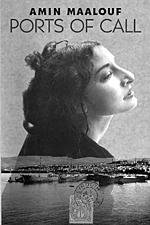
“Ports of Call”
by Amin Maalouf (Harvill)
“If I wanted to draw a faithful caricature” says Ossyane, the hero of this novel, of his beloved father, “I’d say that he dreamed of a world inhabited by generous and courteous men, impeccably dressed, bowing low to the ladies, brushing aside all differences of race, tongue and faith, and as passionate as children about photography, aviation, wireless telegraphy and the cinema.”
Ossyane is pacing his hotel room in Paris, telling the story of his life and family. It begins with the century in Istanbul, then moves with his father to Beirut and on to Ossyane’s student days in France, where he falls in with the resistance and in love with Clara, a German Jew in hiding. After the war the young couple return to the holy land, where the Arab-Israeli conflict explodes their newfound tranquility.
Maalouf is a highly learned journalist, historian and novelist, author of the celebrated “The Crusade through Arab Eyes” and “Rock of Tanios,” which won the 1993 Prix Goncourt. Like Ossyane’s father he is a passionate liberal who despairs at man’s brutality and intolerance. He is also a wonderful, graceful storyteller, who keeps the politics backstage and the people in the limelight.
This excellent novel is full of elegant meditations on Europe and the Orient, fathers and sons, ideologies and independence. But it is above all a love story and a plea of tolerance. It appeared in French in 1996, and is translated, with his usual delicacy, by that other great cosmopolitan, Alberto Manguel.
“The Internet” by Angus J. Kennedy (Rough Guides)
More giraffes on the cover of this, the fifth edition of the best introduction to the Internet, whose sales in Britain and the States are well past the half-million mark. The first half covers a mass of material, from getting connected to creating your own Web page, cutting through the jargon that infests these subjects like a plague. The second half is a guide to the best Web sites, followed by a glossary and a short history of the Net.
And hats off for the cover. The first four editions featured an angry ostrich; this one is graced with three giraffes floating above the clouds. A perfect metaphor for the on-line world, no?
“The Last Life” by Claire Messud (Picador)
“I am an American now, but this wasn’t always so.” Thus begins the second novel by 33-year-old Messud, whose first publication, “When the World was Steady,” was shortlisted for the PEN/Faulkner award in 1996. It is set in Marseilles, among a family of French Algerian emigrants. The narrator, Sagesse LaBasse, is a teenager trying to come to grips with her acne, not to mention her American mother’s isolation and her grandfather’s support for Le Pen. A dense and ambitious work from a promising young writer.
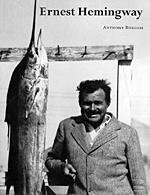
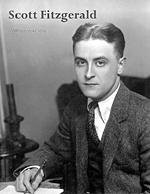
“Ernest Hemingway” by Anthony Burgess and “Scott Fitzgerald” by Arthur Mizener (Thames & Hudson)
Welcome re-issue of these fine short biographies, each with more than a hundred black-and-white illustrations. Burgess is especially good on Hemingway, lauding the writer while bemoaning the macho posturing. He wasn’t the Homeric hero he tried do hard to be, but you have to admire his attempt to tackle life head on in order to write about it.
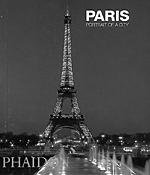
“Paris: Portrait of a City” by Matthew Weinreb (Phaidon, 69F)
“It is rare to feel overawed in Paris, except by the city’s sheer beauty,” writes Weinreb in his introduction to this excellent book of architectural photos, focusing on details and unusual angles. The captions, by Fiona Biddulph, also manage to say new things about familiar subjects. Available in French, as is the companion volume to London.
“Notre-Dame de Paris” by Alain Erlande-Brandeburg (Abrams)
Translated from the French, this oversized, expensive tome is an exhaustive history of the great cathedral. Many of the 262 illustrations are used to trace the building’s evolution, peeling back centuries of upkeep to reveal the breathtaking Gothic core and what remains of the superb sculpture and stained glass.
|
|