Bowfinger
(Bowfinger, le roi de Hollywood)
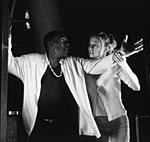
Bobby Bowfinger (Steve Martin, who also scripted this delightful comedy) is a Hollywood producer-director whose success in showbiz gives new meaning to the word “scant.” About to turn 50, fighting off creditors and fueled by now or never enthusiasm, Bowfinger decides to shoot a sci-fi script — “Chubby Rain” — penned in 12 days by his Iranian accountant. In the first of many chutzpah-driven scenes, Bowfinger gets a studio exec to okay the picture if leading action icon Kit Ramsey (Eddie Murphy) agrees to star. Lying through his teeth to his ragtag band of actors — and the technical crew who, in a stroke of cost-cutting genius, are illegal Mexican immigrants rounded up at the border — Bowfinger comes up with an ingenious way to incorporate the volatile, paranoid Ramsey into the film without the star’s knowledge. When the kamikaze filmmaker’s actions threaten to send Ramsey over the edge, he takes refuge at the Celebrity Relaxation Center of Mind Head, obviously a send-up of a 20th century religious movement that begins with “Scien and ends with “tology.” Bowfinger, left high and dry without his unwitting star, hires a very sweet nerd named Jiff (also Murphy) to be Kit’s stand-in. Interviewed for the nebulous post, Jiff remarks, “Running errands would be a major boost for me.” Bowfinger has him run a doozie. Meanwhile, the production’s adorable straight-off-the-bus starlet, Daisy (Heather Graham), builds her casting couch resumé with mindbogglingly mercenary momentum. Smart, funny and played to perfection by a versatile cast, “Bowfinger” presents a blend of satire and schtick that charms and entertains with ease. (Nov 10)
Austin Powers: The Spy Who Shagged Me
I’m willing to wager that in the next century one of the leading uses of time travel will be to UN-get the tattoos that seemed such a cool idea in the ’90s. If you throw a handful of love beads you’ll hit some malcontent ready to say that the sequel to “Austin Powers: International Man of Mystery” is in some way less inspired or entertaining than the original, but I laughed just as hard at both installments.
The year 1969 is like politicians (or film critics) who take themselves too seriously: an endless source of material ripe for satire and ridicule. It helps, I imagine, if you are the same age as or older than Mike Myers, the comic mastermind who created and portrays the randy secret agent whose “mojo” is swiped by his archenemy, Dr. Evil (also played by Myers, as is a third character, a gargantuan Scot named Fat Bastard). Because then you’ll be able to recall firsthand a time when grown men and women cavorted in garb so outlandish that photos of the era can trigger acid flashbacks in those who never even sampled LSD, a time when cinematic masterpieces cohabited with filmic piffle so preposterous that, following brief exposure, today’s youngsters have had to have their jaws surgically repositioned, so quick and hard is their drop to the floor. Whether you were wearing a goatee or were still a zygote in the late ’60s, whether you were swinging or still playing on swings, “Austin Powers: L’espion qui m’a tirée” is splendidly dopey fun. (Oct 27)
Jeanne d’Arc
It’s heresy to review a film one hasn’t seen, so I’ll say nothing about native son Luc Besson’s “Jeanne d’Arc” (out October 27 but not unveiled to the press until Oct 24) except to point out that the real Joan, while old enough to lead legions into battle way back when, could not have gotten in to see the “South Park” movie in the U.S. without her parents or an “adult guardian” today. (Joan was bummed because she’d heard the TV cartoon featured a character named Kenny d’Orléans who got burned at the stake in every episode.)
Again without having seen the movie, I suppose we’ll learn that everybody in medieval France spoke surprisingly good English, including uneducated peasants and shopkeepers. And we’ll probably learn that, with proper vocational training and/or heavenly intervention, girls can do stuff — including wear chain mail and hurl lances — just as well as boys can. So there.
Not to brag, but the young Joan and I have a few things in common. For example, at age 13, Joan, a pious lass, heard voices instructing her to “deliver France” from the English. As a teen beside the phone in my parents’ kitchen, I too, heard voices, instructing Little Cesar’s to “deliver pizza” from the Italians.
I have a policy about never giving away the ending of a movie, but I’d like to speculate about this one. If Besson, a Frenchman, has made a French movie, then we may get some racy revisionism on this “pucelle” thing. History brings us the strangest unverifiable details about great military strategists. Napoleon is said to have lost at Waterloo because his hemorrhoids were acting up. I always figured this was an exaggeration until I happened upon the entry for “fissure à l’anus” in a dictionary owned by my 94-year-old landlady that’s older than she is. The venerable volume’s definition carries an editorial comment: “La douleur est souvent très vive...et parfois suscite des idées de suicide.” (“The pain can be so great that it sometimes gives rise to thoughts of suicide.”) Catherine the Great is alleged to have let her horse ride her instead of the more customary arrangement. And Joan was known as “Jeanne la pucelle,” translated roughly as “Joan Whose Hymen is Still Intact” — which is tricky to fit on a business card and kind of a strange item to lead off with on a résumé if you’ve got other accomplishments to your name, like trouncing Brits at the siege of Orleans.
But if Besson, having embraced Hollywood, has made an “American” movie, then Joan will realize that she really loves the handsomest young inquisitor, he’ll pull strings to get her sorcery rap reduced to “shaking a broomstick with intent to frighten” and the two of them, having undergone constructive growth and change since their initial encounter — when they had nothing in common except slightly better makeup and lighting than the rest of the cast — will set up housekeeping in a quiet corner of Rouen. As the closing credits medley (“Our Love is Hot, Hot, Hot” and “Burning Up for You”) plays loudly enough to get audience members to renounce their respective faiths in exchange for less noise, the standard disclaimer “No alleged heretics or actual saints were harmed in the making of this motion picture” will scroll past, along with a message to “Read the tie-in novelization: ‘Joan of Arc, The Cool Chick Who Defied Authority.’”
The Birds
(Les oiseaux)
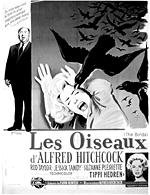
Alfred Hitchcock’s “The Birds,” in which our fine feathered friends ignore all of Emily Post’s advice about how a well-bred bird should behave around humans, is the granddaddy of the IWGITIIWY (I Wouldn’t Go In There If I Were You) school of movies. Production designer Robert Boyle took his cue from Edvard Munch’s “The Scream.” Hitch used 28,000 birds, 3,500 of which had been trained. When asked how he got such good performances from the feathered cast, he replied, “They were very well paid.” I suggest Voice readers flock to see the result, in restored prints at the Grand Action and MacMahon cinemas. (Oct 27)
The Straight Story
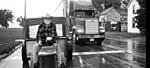
The French title “Une Histoire vrai” (A True Story) doesn’t communicate the playful pun inherent in “The Straight Story,” the quirky, heartening, inspired-by-actual-events tale of Alvin Straight (Richard Farnsworth), a retired farmer in Laurens, Iowa, who, determined to see his ailing brother who lives several hundred miles away in Mt. Zion, Wisconsin, stubbornly covers the distance on a vintage tractor, the only vehicle he’s permitted to drive given his poor eyesight. The 73-year-old’s six-week journey is full of adventures for Alvin and unalloyed pleasures for the audience.
When the film, still wet from the lab, premiered at Cannes in May, many a critic was dumbfounded at creepy-crawly David “Blue Velvet” Lynch making a sweet movie full of wholesome helpful characters and the soothing wide-open spaces of the American heartland. People acted as if, by making an only slightly off-kilter ode to roots and self-reliance, Lynch had violated some unwritten rule — probably the same one that states that John Travolta must be clapped in irons if he tries to switch from disco dancing to tap and Alain Ducasse must be flayed alive if ever he strays from three-star cuisine to flip burgers for an afternoon. (This is the same little-violated unwritten rule that says civilization would grind to a halt if any time-honored aspect of the French bureaucracy were to be overhauled.)
Farnsworth, who has been in movies as a stuntman and actor since 1937, is positively numinous in his folksy, quietly determined way and Sissy Spacek gives a wonderful performance as Alvin’s daughter. (Nov 3)
The Big One
“The Straight Story” and “The Big One” would make a terrific double feature for foreigners trying to get a handle on the things that make America great — and not so great.
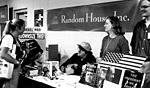
Part stand-up comedy routine, part investigative reporting and all laugh-out-loud entertaining, “The Big One” is a documentary account of author-filmmaker-social militant-dumpy guy Michael Moore’s 1998 tour of 47 American cities in 50 days promoting his book “Downsize This!” with a guerrilla video crew in tow. Moore’s patented chutzpah carried him into the headquarters of America’s industrial giants to ask why, exactly, they had to close factories and lay off workers when the firms in question were enjoying record profits.
This doesn’t sound like a laugh riot, but Moore’s 1989 gem “Roger and Me” was a rollicking account of life in Flint, Michigan (rated the nation’s worst place to live by Money magazine), when chief employer General Motors shut down without the slightest regard for generations of autoworkers. Ten years later some people are still chuckling at the gallows humor in that spirited renegade opus.
In “The Big One,” Moore, a master of the Prank that Makes a Point, starts out with a hilarious account of an experiment he conducted to see whether political candidates would accept contributions regardless of the nature of the donor. So he set up associations and made out $100 checks to Bob Dole from “Satan Worshippers for Dole,” to Pat Buchanan from “Abortionists for Buchanan,” to Ross Perot from “Pedophiles for Free Trade” and to Bill Clinton from “Hemp Growers of America” to see if anyone would uncritically pocket the dough. All four checks were endorsed and cashed without comment, starting with Buchanan’s.
Pointed bouts of political activism go hand in hand with riotous lessons in how to shake a stalker, how to storm city hall and how to test the patience of PR and security people. Moore’s ornery, extremely funny documentary is also educational. For example, if you’re anything like me, you probably didn’t know that a substantial portion of TWA’s telephone reservations are handled by prison inmates in Ventura, California.
The film’s title stems from Moore’s assertion that the USA should just change its name to The Big One because the purely descriptive “United States of America” lacks punch. Moore’s film has punch in spades. You’ll feel smarter — and angrier — coming out of the theater. ( Nov 10)